
The Science of ‘Practice Makes Perfect’
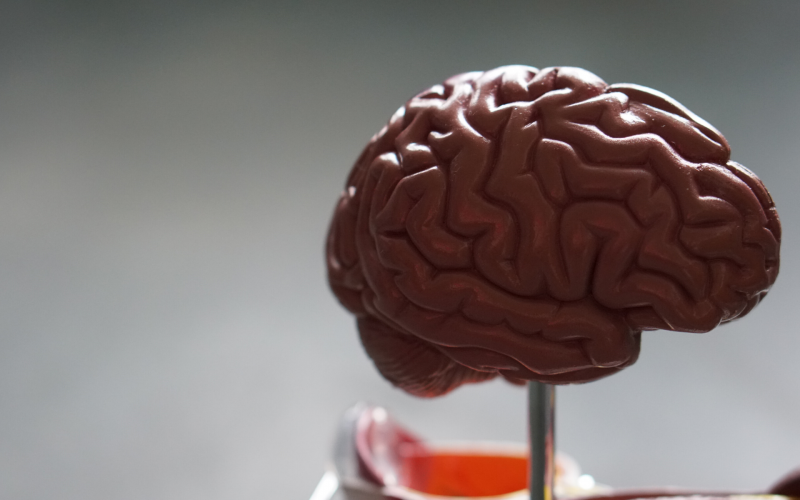
Our CSO, Georgina Bale, on how our brains are designed for learning and mastering new skills
In 2008, Malcolm Gladwell published a book called Outliers: The Story of Success that introduced something called the 10,000 hour rule.
In this chapter, he argued that in order to master a skill, it would take 10,000 hours of deliberate, high-quality practice—which works out at around 20 hours a week, for about 10 years.
Although this theory has been questioned a lot (can you really put an exact number on success?) the idea of ‘practice makes perfect’ existed long before Malcolm got his publishing deal.
So, how does regular practice improve your ability to learn?
The answer lies right there in your brain.
Your brain and the power of practice
Your brain has thousands of cells called neurons, which are the basic building blocks of the brain.
A neuron has dendrites, which help to bring electrical signals to the cell body, and axons, which take information away from the cell body. When you look at a neuron, it appears to be split into three parts—the top has dendrites and the cell brain (otherwise known as the nucleus), the middle contains axons and at the bottom, there’s the axon terminal.
When you learn a new skill, the neuron grows more dendrites—the same way a tree grows new branches. These branches then reach out to connect with the axon terminal of another neuron, and so it repeats to create a long chain for nerve signals to travel at incredibly fast speeds.
The quicker these nerve signals travel, the more you will master the skill.
So, where does practice come in?
Well, the cable of axons between the top and bottom of the neuron has a lot to contribute here. On each of these cells, you have something called myelin, which helps your nerve signals travel faster through the cable from neuron to neuron.
Of course, our bodies create this naturally, but as we get older, that production slows down—unless we actively practice new skills to send those signals flying and get that myelin growing.
Again, the faster the signals can travel, the easier a certain skill will come to you.
High-quality practice makes perfect
Our brain is just like our bodies—if you go to the gym four times a week but don’t break a sweat, you’re not going to get results.
It’s the same for your brain.
Whether you’re focusing for 10 hours or 10,000, it’s the quality of that practice that really matters. Each stage should challenge your ability and build upon what you’ve grasped—that’s what will get those neurons in great shape.
Scientists call this ‘dedicated practice’ or ‘deep practice’—and dedicated in all senses of the word.
That means setting aside regular time, removing distractions and fully focusing on the task at hand.
For business owners, the idea of an hour without any distractions feels almost impossible (hello inbox, my old friend).
But if dedicated practice is what you’re after, then a distraction-free zone is exactly what you need.
That’s where a virtual assistant—or more specifically, an on-demand executive assistant—comes in.
How a Virtual Assistant can help you achieve more high-quality practice
First of all, a Virtual Assistant can take care of the tasks that can be outsourced.
Inbox management, calendar management—you name it.
This is where flexible admin support and outsourced business admin can make a huge difference—freeing up time so you can focus on deep, uninterrupted work.
Speaking of calendar management, a Virtual Assistant can plan your week or month to make sure you get time in for that dedicated practice.
Whether that’s ad hoc business support in the UK or ongoing help, it’s about creating space without needing to hire.
If you need help with your practice, a Virtual Assistant can research tools, articles, courses or mentors who could support your learning.
This kind of task-based support service allows you to stay focused on the skill itself, rather than getting lost in the admin around it.
A big part of dedicated practice is monitoring your progress. With the help of a VA, you’ll have someone to record and report on how far you’ve come (plus, they’ll be happy to offer some words of encouragement when you need it most).
It’s a simple but powerful example of how support for busy professionals and scalable admin support can directly impact performance—not just productivity.
Practice plays a big part in learning, there’s no doubt about it—but it’s not the only key to success.
If anything, the most important thing is how much you care about what you’re learning and keeping an open mind that’s okay with making mistakes.
When you enjoy what you do and actually want to learn, the practice will come easy.
Ready to create more time to learn and grow?
If you’re constantly distracted, overwhelmed, or struggling to find time to focus, it might not be a discipline problem—it might just be a support problem.
With flexible, no-contract virtual assistant support, you can outsource admin without hiring, reduce mental load and create the space you need to focus on what actually matters.
If a Virtual Assistant could help you achieve your goals, learn more about our Hive Minds experts and get in touch.